Guest post by by Maya Bennett, a 27-year-old British digital nomad and nature lover.
__ __ __
I only had three days in Bangkok before flying south to Phuket, which meant I made the classic first-time-visitor mistake: I saved approximately 37 places on Google Maps and convinced myself this was a realistic itinerary.
It was not.
Bangkok is enormous, hot, exciting, slightly chaotic and very good at making time disappear.
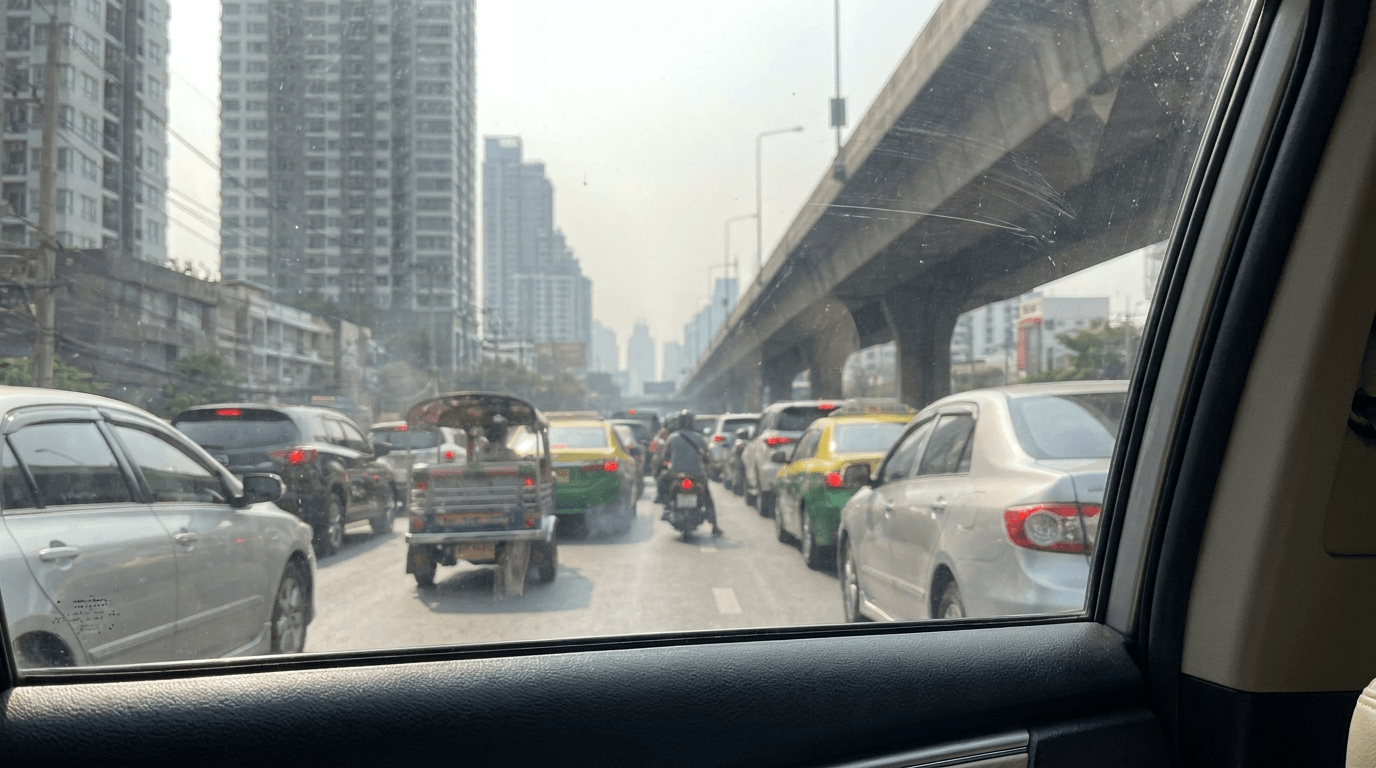
You leave your hotel planning to “quickly visit one temple,” and somehow it is four hours later, you are holding an iced Thai tea, and you have no idea which side of the river you are on.
So instead of trying to see everything, I focused on five experiences that gave me completely different sides of the city: old Bangkok, street food, river life, the skyline—and one surprisingly peaceful day I genuinely did not know was possible from Bangkok.
I thought seeing elephants meant adding Chiang Mai to my route.
It turns out I was wrong.
Skip to the elephant experience →
Bangkok Is Overwhelming—So Don’t Try to Do Everything
Bangkok is not a city that rewards aggressive scheduling.
Distances look manageable on a map until traffic, heat and the sudden need for mango sticky rice enter the situation. Trying to squeeze six temples, three markets, a cooking class and a rooftop bar into one day is technically possible—but it may leave you remembering more about taxi rides than Thailand.
My advice is to choose experiences that feel different from one another.
See something historic. Eat somewhere loud. Spend time on the river. Leave the city for a while. Then come back and look at Bangkok from above.
Five good memories are better than twenty rushed check-ins.
1. See Old Bangkok Before the Heat and Crowds Take Over

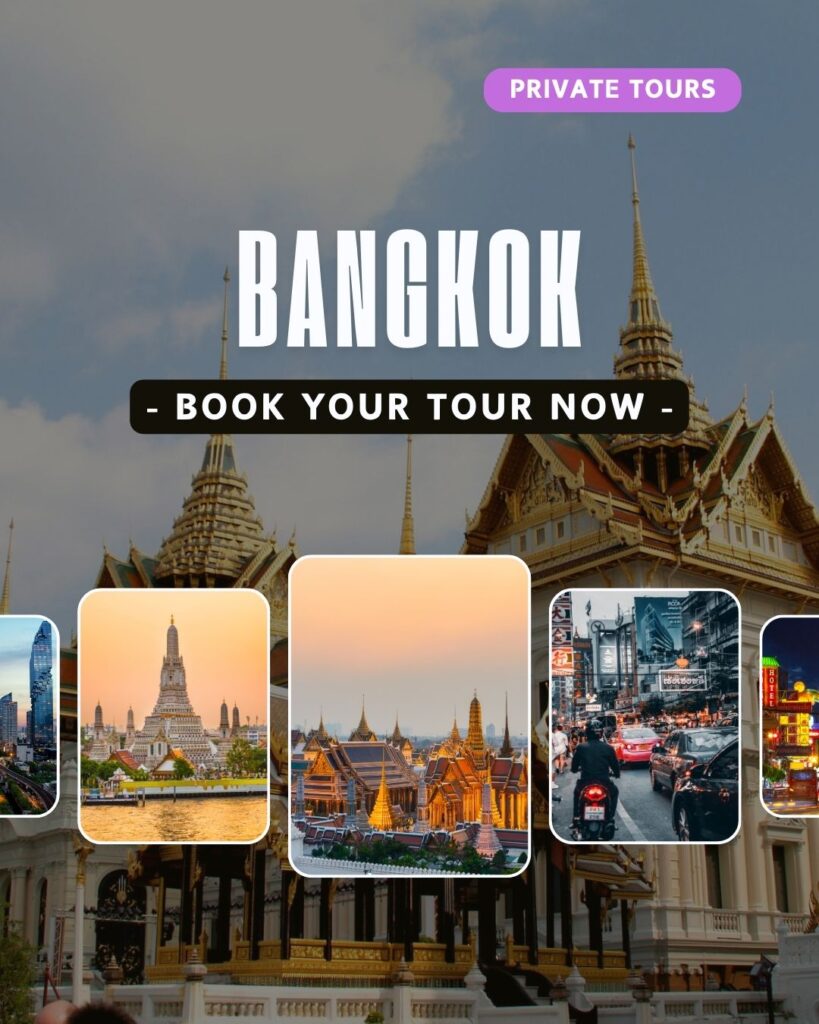
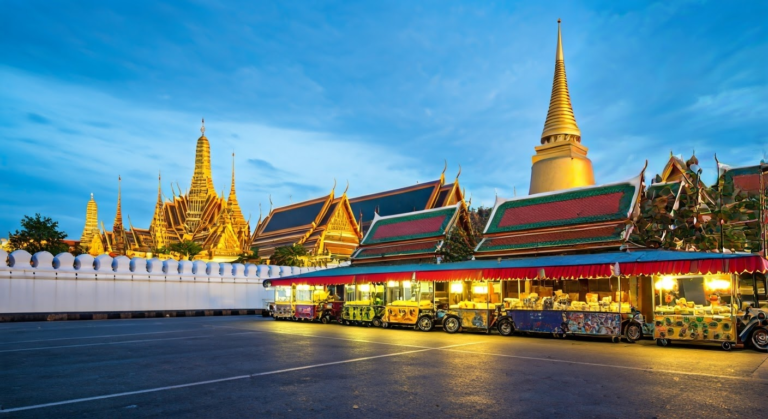
Bangkok’s temples are famous for a reason. Even if you normally avoid the most obvious tourist attractions, it would feel strange to visit the city without seeing at least part of its historic center.
The trick is not trying to visit every temple.
Choose one or two—perhaps the Grand Palace and Wat Pho, or Wat Pho followed by a river crossing to Wat Arun—and arrive as early as your morning motivation allows.
Before midday, the light is softer, the courtyards feel calmer and you have a better chance of noticing the details instead of concentrating entirely on finding shade.

That was what surprised me most. From photographs, I expected gold, statues and dramatic architecture. In person, I kept getting distracted by the smaller things: patterned tiles, tiny bells moving in the breeze, incense smoke and the way people naturally lowered their voices as they stepped inside.
Wear clothes that cover your shoulders and knees, carry water and resist the temptation to turn the morning into a temple marathon.
You do not need seven nearly identical photographs in front of seven different buildings. Give yourself enough time to look around properly.
Bangkok will still be there when you finish.
2. Eat Your Way Through Chinatown After Dark
There are many excellent places to eat in Bangkok, but Chinatown after dark feels like a full travel experience rather than simply dinner.

The neon signs come on. Plastic stools appear on the pavements. Woks start firing, traffic crawls past, and every few meters there is another smell convincing you that you are hungry again.
My original strategy was to research “the best food in Bangkok” and create a perfectly organized list.
My better strategy was to stop overthinking it.
Try one place you have heard about, then follow your curiosity. Join a queue that looks promising. Order one dish you recognize and one you do not. Share small portions so you can keep tasting things.
I ended up eating peppery noodles, grilled seafood, crispy pork and a sesame dessert I chose almost entirely because the woman in front of me looked extremely happy while eating it.

She was right.
The best Chinatown evenings are not really about finding the single most famous stall. They are about walking, tasting, stopping, changing your mind and accepting that your clothes may smell slightly smoky afterwards.
Go hungry. Wear comfortable shoes. Carry tissues.
And do not schedule a serious breakfast for the following morning.
3. See Bangkok From the Water, Not Only From the Road

Bangkok can feel confusing from street level.
Roads curve unexpectedly. Traffic seems to operate according to its own mysterious logic. A place that looks close may involve several turns, a pedestrian bridge and a moment of questioning your life choices.
From the Chao Phraya River, the city suddenly feels easier to understand.
Old temples, wooden homes, riverside hotels, apartment towers and modern shopping complexes all sit along the same moving line. Bangkok’s contrasts are still there, but from the water, they feel connected rather than chaotic.
You do not necessarily need an expensive private cruise. A public ferry can be an experience by itself, especially if you are already visiting Wat Arun or exploring the historic area.

I crossed the river in the late afternoon, when the heat was finally beginning to soften. The breeze felt almost suspiciously good after several hours of temples and pavements.
My favorite part was simply having space around me.
After hours of tuk-tuks, crossings, maps and crowds, being on the river felt like someone had turned Bangkok’s volume down.
But the biggest change of scenery came the following morning, when I left the temples and towers behind for something I had not known was possible from Bangkok.
4. Visit an Elephant Sanctuary From Bangkok—Yes, I Was Surprised Too
Let me begin with the part that confused me too:
The elephant sanctuary is not in central Bangkok. You are not going to find elephants wandering behind a shopping mall in Sukhumvit.

The experience takes place in Chonburi, near Khao Khiew, around 1.5 hours from Bangkok depending on traffic. The important part is that it can be booked as a complete tour from Bangkok, with round-trip transport available from selected hotel areas.
That makes it possible to spend part of your short Bangkok stay with elephants without adding another domestic flight, changing hotels or rebuilding your entire Thailand itinerary.
And for me, that was the surprise.
I Thought Elephant Experiences Were Only for Chiang Mai
Before this trip, elephants and Chiang Mai were automatically connected in my mind.
Bangkok was for temples, shopping, food and rooftops. Chiang Mai was where you went for mountains, nature and elephant sanctuaries.
But Chiang Mai was not part of my route. Like many travelers, I was continuing south towards Phuket.
That meant I had quietly accepted that elephants were not going to be part of this trip.
Then I discovered that there were morning and afternoon elephant sanctuary programs available from Bangkok.
At first, I was slightly skeptical.
Would the drive take up the entire day? Would it feel rushed? Would it be another attraction using the word “sanctuary” because travelers like the sound of it?
Those were reasonable questions.
But the idea of exchanging Bangkok’s traffic for a few hours around elephants and nature was difficult to ignore.
Getting There Was Easier Than I Expected
I chose the morning program because I wanted to keep my evening free.
I was staying near Asok in Sukhumvit, one of the selected Bangkok pickup areas. The evening before the tour, I received confirmation of my pickup window and a reminder to bring clothes that could get wet.
At 7:18 the next morning, the driver messaged to say he was outside.
I came downstairs holding an iced coffee, still privately wondering whether using most of one of my three Bangkok days was a questionable decision.
We collected another couple nearby, then gradually left the high-rises behind.
The journey did not feel short, but it did feel straightforward. I did not have to work out train connections, negotiate with a taxi driver or spend the morning watching the route on my phone.
By around 9:45, we were at the sanctuary.

The morning program normally collects guests between 7:00 and 8:00, reaches the sanctuary around 9:30–10:00 and departs at approximately 13:00. The afternoon option collects guests around 11:00–12:00 and finishes at the sanctuary at approximately 17:00. Exact times depend on traffic and hotel location.
This is not a quick attraction to squeeze between lunch and an airport transfer.
Allow most of the day.
But it is manageable inside a two- or three-night Bangkok stay, particularly because there are two departure options.
| Morning program | Afternoon program |
|---|---|
| Pickup usually between 7:00 and 8:00 | Pickup usually between 11:00 and 12:00 |
| Best for early starters and families | Better for travelers who prefer a slow morning |
| Sanctuary program finishes around 13:00 | Sanctuary program finishes around 17:00 |
| Keeps the evening available | Avoids an early holiday alarm |
Both options include the same main activities. The biggest difference is the pickup time and the overall flow of the day.
What the Elephant Experience Actually Felt Like
The first thing I noticed after arriving was the change in pace.
Bangkok encourages you to keep moving. Cross the road. Find the entrance. Check the map. Order the taxi. Reach the next place.
Here, there was nothing to rush towards.
We met our guide, changed into traditional Mo Hom shirts and received a short introduction to the sanctuary and its elephants.
That was when we met Mali.

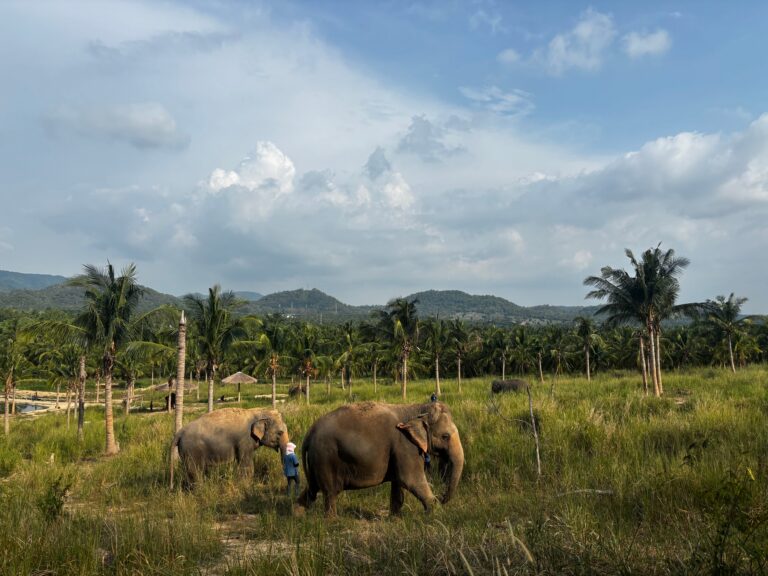
Mali is described by the sanctuary as a calm matriarch. She was rescued in 2014 after spending around 25 years in a logging camp.
Knowing even that small part of her background immediately changed the experience. She was not simply “an elephant” brought out for visitors. She had a name, a history and a completely recognizable presence.
During feeding, Mali reached for a banana from my hand, ate it with extraordinary efficiency and then turned her attention to a nearby branch as though the rest of us had ceased to exist.
Honestly, I respected it.
Nearby, Donut—the youngest member of the sanctuary family—stayed closer to her mother, occasionally moving forward with obvious curiosity before drifting back again.
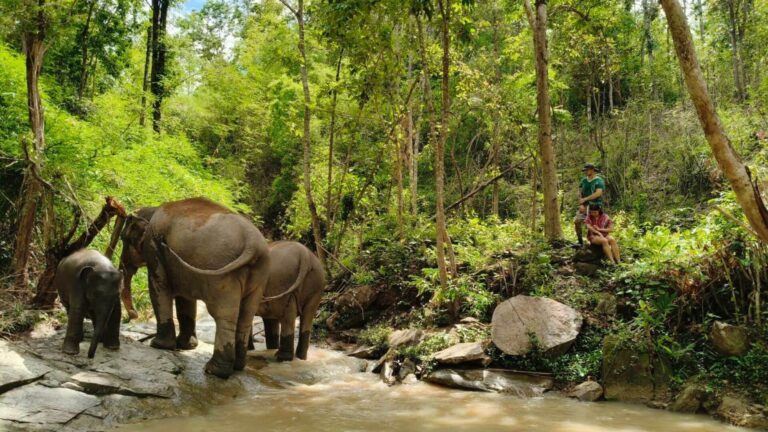
The program includes feeding, learning about the elephants, observing them walking and foraging, visiting a mountain viewpoint and joining guided water play when conditions are suitable. A local Thai meal is also included.
Of course, feeding an elephant is fun.
They are not shy about snacks.

But the moment I remember most happened while we were walking.
Mali stopped beneath a tree and began pulling at the leaves. Everyone became quiet without being told to. For a minute or two, there were no instructions and no pressure to pose for a photograph.
We simply watched her eat.
You could hear the leaves tearing, insects somewhere in the grass and the occasional click of a camera.
It sounds like nothing.
It was probably my favorite part of the day.
Responsible Without Turning the Day Into a Lecture
I am not an elephant-welfare expert.
I was simply a traveler who knew I did not want elephant riding, forced tricks or a performance designed around tourist photographs.
The Bangkok program does not offer elephant riding or circus-style shows. It does, however, include direct interaction through feeding, guided walking and possible supervised water play.
That distinction should be explained honestly.
This is not an observation-only program. Travelers who only want to watch elephants from a distance should choose an observation-only experience.
For me, the important part was knowing what the program involved before booking: no riding, no shows, guided interaction, and activities that can change according to weather, safety and the elephants’ natural rhythm.
The water activity is not guaranteed. On our visit, conditions were suitable, so we joined a supervised session.
The elephants were considerably more relaxed about the water than I was.
I had packed extra clothes but somehow forgotten that “water play” usually means your hair will also become involved.

Is It Worth Using Most of a Day?
For someone staying in Bangkok for a week, this is an easy decision.
For someone with only two or three nights, it requires more thought.
You will use a significant part of the day. You will not be able to combine the tour with five major Bangkok attractions. Traffic may also affect the time you return.
I arrived back near my Sukhumvit hotel at around 15:35.
I would have felt completely comfortable booking dinner at 18:30 or going to a rooftop later that evening.
I would not have booked a flight, an important appointment or a non-refundable reservation close to the expected return time.
But I was glad I used the day for it.
The experience stopped me from treating Thailand like a checklist.
Instead of racing from one famous attraction to another, I spent several hours doing something slower, more emotional and completely different from the rest of my Bangkok itinerary.
This tour makes the most sense for:
- Travelers going from Bangkok directly to Phuket, Krabi, Samui or another southern destination
- Visitors who are not including Chiang Mai in their route
- Couples wanting something more meaningful than another city attraction
- Families looking for one memorable shared experience
- First-time Thailand visitors who have always hoped to see elephants
- Travelers who prefer having transportation and logistics arranged
It is less suitable when you only have a few free hours, need to catch a flight that evening or become deeply stressed whenever Bangkok traffic changes your schedule.
What Is Included?
The Bangkok programs currently include round-trip transportation from selected pickup areas, an English-speaking guide, insurance, elephant food and snacks, a local Thai meal, drinking water, free photography, a traditional shirt and the guided elephant activities.

Hotels outside the regular pickup zones may require a meeting point, private transportation or an additional charge.
Send the booking team your exact hotel name before confirming.
That one small step prevents a surprising number of travel-day problems.
I Almost Missed This Experience
Morning and afternoon elephant sanctuary programs are available from Bangkok. Check your preferred date and hotel pickup area before choosing the schedule that fits your trip.
View the Bangkok Elephant Sanctuary Programs →
Prefer an early start? Choose the morning program and keep your evening free.
Want a slower morning? Choose the afternoon departure.
5. End the Day Above the Bangkok Skyline
After spending most of the day away from Bangkok, returning to the city feels strangely dramatic.
The roads become busier. Towers start appearing again. The sky changes color behind the buildings, and suddenly you are back among train lines, shopping centers, motorbikes and rooftop lights.
I showered, changed and went out again that evening.
Ending the day above the skyline was the perfect contrast.

You do not need to choose Bangkok’s most expensive rooftop bar. There are plenty of places where you can order one drink, watch the sun disappear and appreciate the scale of the city.
Check the dress code before going. Some rooftops are relaxed; others may reject your sanctuary sandals no matter how much personal growth you experienced earlier.
What I loved was the contrast.
That morning, I had been watching elephants move slowly through green surroundings.
Now I was looking across a city of millions of people moving in every direction.
Both experiences belonged to Bangkok.
That was the part I had not expected.
How to Fit These Five Experiences Into Two or Three Days
You will enjoy Bangkok more when you leave room for delays, snacks and spontaneous changes.
Here is how I would organize these experiences without turning the trip into an endurance challenge.
A Two-Day Bangkok Itinerary

Day one: Old Bangkok and street food
Start early with the Grand Palace, Wat Pho or another historic attraction. Spend the afternoon around the river, then continue to Chinatown for dinner.
Day two: Elephants and the skyline
Choose the morning elephant sanctuary program if you want to return for dinner or a rooftop evening.
Choose the afternoon option if you prefer a slow breakfast and do not mind returning to Bangkok later.
A Three-Day Bangkok Itinerary

Day one: Historic Bangkok
Visit one or two temples, explore the river and finish with Chinatown.
Day two: Elephant sanctuary experience
Give the program most of the day. Keep the evening flexible, particularly if you choose the afternoon departure.
Day three: Modern Bangkok
Explore a neighborhood, market, shopping area or café scene. Book a massage and finish at a rooftop or beside the river.
Three days will feel more relaxed, but the elephant experience can still fit into a thoughtful two-day itinerary.
The word doing the most work here is thoughtful.
Do not book a late-night flight, an expensive dinner reservation and an elephant-tour return on the same evening, then blame Bangkok when traffic refuses to respect your spreadsheet.
What I Would Check Before Booking an Elephant Tour From Bangkok
Before confirming any elephant experience, ask a few practical questions:
- Is round-trip transportation included from your hotel area?
- What is the approximate return time?
- Are elephant riding and performances prohibited?
- What direct interactions are included?
- Is water play guaranteed or dependent on conditions?
- What should you bring?
- Is the experience suitable for children?
- What happens during heavy rain?
- Are food and photographs included?
- What are the change and cancellation conditions?
A responsible operator should explain what happens during the program, how transportation works and what kind of interaction guests can expect.
You should not have to decode vague phrases such as “magical elephant adventure” to understand what you are actually booking.

The Bangkok Experience I Didn’t Know I Was Missing
I still loved Bangkok for all the reasons people told me I would.
The temples were beautiful. Chinatown was delicious and chaotic. The river gave me a completely different view of the city. The skyline made Bangkok look impossibly huge.
But the experience I talked about most afterwards was the one I had not originally planned.
I had assumed that because Chiang Mai was not part of my route, elephants would not be part of my Thailand trip either.
Discovering an elephant sanctuary tour from Bangkok changed that.
Yes, it requires most of a day. Yes, the sanctuary is outside the city. And yes, Bangkok traffic will always have its own opinions about your return time.
But in exchange, you get something rare during a short city trip:
Space to slow down.
For a few hours, there are no temple queues, shopping centers, train announcements or decisions about where to eat next.
There are simply elephants, nature and the realization that Bangkok can give you much more than you expected—sometimes by helping you leave it for a while.